NeurOptimal Neurofeedback therapy Innerwavecenter
We all have the innate ability to heal and grow but sometimes we get stuck. .
Neurofeedback is a process that can be used to help people learn how to control their brain waves. It is a type of biofeedback that allows people to see their brain waves in real time. This can help them to understand how their thoughts and emotions are affecting their brain activity.
Do you or a friend struggle with:
| InsomniaHeadachesAnxietyAngerFocusing Hyperactivity/ADD/ADHD Executive Stress | Mood SwingsEmotionalTraumas ChronicGrief ImpatienceSeizuresHyper-vigilanceLife Transitions | RepetitiveWorryingFeelingOverwhelmedSelf EsteemAddictionsImpulsivenessIrritabilityCompulsiveness |
InnerWave Center uses NeurOptimal Neurofeedback to re-train your own brainwaves to release old stuck patterns and transform them into more stable, efficient and organized patterns with flexibility and lasting resilience. A lot of energy can be wasted spinning wheels about what happened yesterday or what might happen tomorrow. Neurofeedback trains you to operate in the present, allowing your brain to be calm yet agile. Neurofeedback is non-invasive, drug free, does not change ‘who you are’ and does not require you to relive old traumas.
How does NeurOptimal Neurofeedback therapy work?
While a client listens to music, sensors placed on the client’s scalp read his/her brainwaves (EEG) into a computer that monitors the EEG activity. When the EEG shows diffuse, disorganized turbulence, (a sign of habitual stress), this is called to the attention of the brain by pausing the music. The brain takes note of this change in its environment, assesses that there is no need for stress and relaxes, which turns the music on. Repetitive interrupting of the habitual stress response with assessment followed by relaxation, re-trains the brain to maintain calm and focus on real and present input, rather than building stress upon stress to crescendo levels. In this way, the brain learns to stay in the present rather than recycle yesterday’s dramas or future worries. It is more agile in its response to what is actually happening. As the brain relaxes, the body relaxes using its innate ability to heal and grow. No matter what diagnostic label or at what age one starts the training process, every brain can benefit including high performance athletes, executives and performing artists. It’s a gradual training process working toward optimal mental functioning in 10-30 sessions for life-long changes at affordable cost. For a more technical explanation, go to end of page: The Brain Operates as a Non-Linear Complex Dynamical System.
Measuring Progress of NeurOptimal Neurofeedback therapy
Because one’s own brain is training itself, the progress is gentle and subtle. Just like training your brain to multi-task by repetitively taking on one more activity and letting the brain accommodate, one doesn’t realize how much stress one takes on until it reaches the point of being overwhelmed. So too, the brain gradually accommodates to de-stressing. To measure progress, the client is given a 3 page initial questionnaire, which is then compared to the same questionnaire after 10 sessions. It’s interesting to see how surprised people are at their changes. Brain mapping allows for a thorough analysis using a qEEG. As training progresses, individuals may find that their need for medications change. It is important for participants to communicate with their prescribing physician regarding their progress and medication dosage levels. Dynamic interpersonal changes may also require adjustments in family, friend and group interactions. Clients report feeling calmer, more focused, grounded, more efficient, and clearer thinking as a result of their neurofeedback training. See Resources and YouTube testimonials. Highly trained athletes and stage performers often use neurofeedback to improve their skills and focus. It is beneficial for any brain.
What is the time commitment of NeurOptimal Neurofeedback therapy?
Similar to physical training, Neurofeedback is a gradual training process working toward optimal mental functioning in 10-30 sessions. It is helpful at the beginning to train twice a week for 10 sessions, and then either continue at twice per week or taper to once per week. Once the brain is re-trained, the effects are long lasting. Occasionally, one might encounter an extremely stressful period or have a trauma that will be helped by a few tune-up sessions.
How much does neurofeedback therapy cost?
Medical insurance does not cover Neurofeedback. However, by not having to hire extra billing personnel, the rates are very reasonable compared to other types of therapy. Training sessions are $70/individual session or can be discounted in packages of five sessions:
Mind/Body Healing with NeurOptimal Neurofeedback therapy
The brain operates as a Non-linear Complex Dynamical System... What’s that?
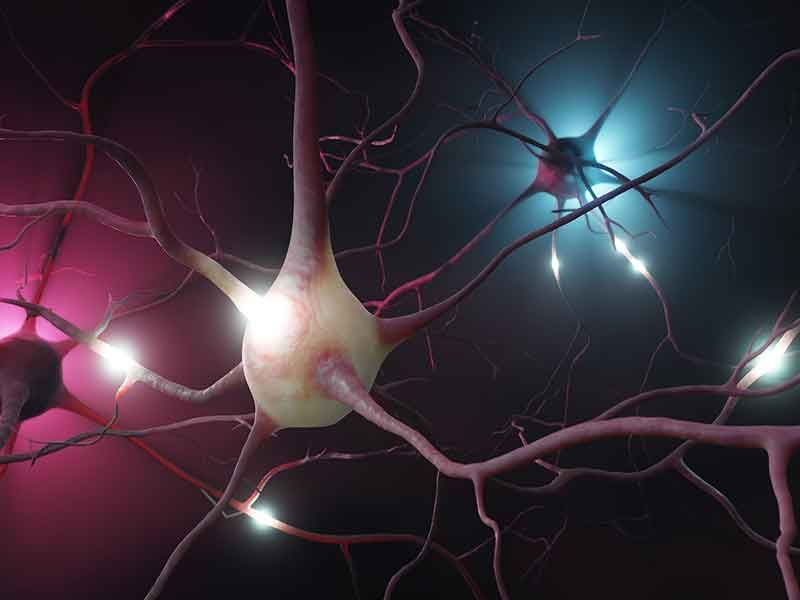
The brain likes to be in a state of flux always changing, never static like a TV that only has one option: stimulus response. A TV is linear... one action leads to an expected result. The brain, however, is complex with multiple inputs and feedback loops from 100 billion wires (neurons), each averaging 10,000 interconnections with other neurons. The brain thrives on constant multi-dimensional change, because of the incredible volume of information it processes.These Non-linear Complex Dynamical Systems like the brain are self-regulating, self correcting, self rewarding. For example, when a baby gropes around reaching for a toy and finally succeeds, the baby wants to repeat that successful action, so the brain will find the group of neurons that made it possible. Those neurons will fire together again and again as the baby practices reaching for the toy. Successive reaches will fine tune this set or cluster of neurons as more experience, memories, and sensations are added to the original group of neurons. Neurons that fire together stay together in clustered units. This gives the brain stability and resilience with the benefit of continually refining the action/experience.
Another example might be when one hits a tennis ball on the sweet spot of the racket. One’s whole body feels like it wants to repeat that exact hit over and over. Those neurons that made it happen once will make it happen again because the reward of success felt so good. Success motivates repetitive practice. These clusters of neurons that are bundled as a result of success become almost automatic. So we can drive a car, walk, clap our hands without thinking through how to do it each time.
Imagine this stability and resilience in all areas of life......emotional, behavioral, mental. It is often not so clear as motor patterns, not so neatly clustered. Take the example of the growing baby who is learning to interact with its external environment. The toddler takes off her shoes one day and mom who is in a good mood rewards her with “good baby ”, but on the next day when mom has a rotten day, she scolds the baby for leaving shoes and socks all over the house. The toddler begins to get mixed messages. The brain doesn’t know how to refine an inconsistently successful action, let alone inconsistent emotional rewards. So the neuron clusters are not so stable/resilient; they fire more diffusely.
When we get older and get stressed out from overwhelming multitasking, or relationship interactions of all shades, or our coping mechanisms fray, these all reflect diffuse neuron firings. They are our habitual stress/anxiety responses. Taken to an extreme, these diffuse firings override or short circuit the underlying organized cluster firings and one’s pain may become one’s persona. Chronic stress may become the person’s identity. Insomnia may take over. Mood swings may become volatile. Genetic predispositions may trigger. Hyper-vigilance, hyper-activity, migraines, ruminating worries, post trauma reactivity may become dominant. Neurofeedback re-trains these habitual stress/anxiety responses.
How would it feel to be calm, grounded and focused ? It’s possible with Neurofeedback.
Explanation of how NeurOptimal neurofeedback works
Neurofeedback explained in this short YouTube video presentation by SciShow. What Is Neurofeedback Therapy? Neurofeedback therapy claims to help you change behaviors by monitoring your brain waves - but how does that actually work? And what does the science behind it look like?Resources:
Web site of International society for neuro regulation and research Understanding Complexity by Prof. Scott Page, University of Michigan; Recorded by The Teaching Company, DVD (12-half hour lectures) Ubiquity by Mark Buchanan Emergence by Steven Johnson The Edison Gene by Thom Hartman